Principle # 11


Inject people
with hope.


On Saturday, May 3, 1997, I had the privilege of attending a Special Olympics event with my family. Our granddaughter, Anne, participated on two races and won a silver and a gold medal. She was exited.

The opening ceremonies, complete with color guard, speeches master of ceremonies, salute to the flag, "Star Spangled Banner," and performance by a drill team were all spectacular to watch. However, the most moving sight was watching the opening parade. Many emotions were displayed, but the main one was the sheer delight of so many of the athletes-their smiles, the jumping up and down, the way they hugged each other, and the enthusiasm they displayed.

The master of ceremonies reminded us that just thirty years ago the "experts" believed that no mentally retarded person would ever be able to swim the length of an Olympic-size swimming pool or run a mile. But then he rightly observed that they did not measure the heart or the soul of these athletes.

Question: "What would happen if all of us used the same percentage of our ability that these special athletes use of theirs?" Seeing the athletes' commitment gave hope to those present that day. Remember, those who give hope to others are generally filled hope themselves.


I pray that God will help
you overflow with hope in
him through the Holy
Spirit power within you.


Romans 15:13

Principle # 10

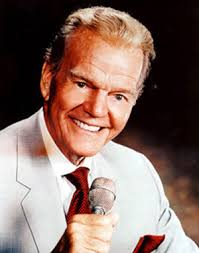
"Paul Hrvey"


Remember-the
"free" cheese is
in a mousetrap.


Years ago Paul Harvey described how Eskimos in the frozen North kill wolves.They take a razor-sharp knife, dip it in blood and freeze it. Next, They bury the handle of the frozen tundra with the blade sticking up. Wolves, attracted to the scent of blood, come to lick the blade. The cold numbs the wolf's tongue and by the time he reaches the blade he's unaware he is licking a sharp edge. As he begins to bleed, he licks even faster until ultimately he bleeds to death.


In many ways Paul Harvey was describing the way young people are lured into drug and alcohol traps. Early on, some drugs and alcohol make a person feel good and they enjoy the feeling. After a few "trips" on those drugs and alcohol, however, they begin to lose their sense of perspective and the drugs have less and less effect. This leads them to indulge in stronger, more potent drugs-and he or she is "hooked."


Interestingly enough, the wolf and the drug addict have another thing in common. Each wanted the same thing-namely, to give little or nothing and get a lot. A more successful formula is to give a lot, and you'll get a lot in return.


For even when we were
with you, we gave you this
rule: "If a man will not
work, he shall not eat."

2 Thessalonians 3:10

Principle # 9


The profile of
a wealthy person
is this: hard work
perseverance,
and most of all,
self-discipline.

The Louis Harris poll of people who earned more than 142,000 a year and had a net worth of over a half a million dollars, not including their homes, described these successful people as being unexciting, middle-aged, and cautious. They emphasized family values and the work ethic. Eight-percent of them were married. Ninety-six percent of them acquired their net worth through hard work, which means they denied themselves immediate gratification so they could have what they really wanted later. Eighty percent were politically conservative or middle-ofthe-road, and they were relatively non-materialistic.

In other words, their goals went beyond money. Eighty five percent said that their major objective was to provide for their family (that's an attitude of responsibility ). Only 11 percent rated owning an expensive car as being very high on their want list. The badges of success didn't matter to them nearly so much as family,education, and their business or job-not much excitement but, infinitely more important, they had an excellent quality of life. Persistence, consistency, discipline, and hard work (all of which are learned skills) made the difference. Their lives seemed to in balance.


Do you know a hard-
working man? He shall be
successful and stand
before Kings!

Proverbs 22:29 TLB

Principle # 8


Love is not the basis
for marriage;marriage
is the basis for love.
Being loved is the
second-best thing in
the world;loving
someone is the best


The True Love Daily Checklist

  1. Did I speak words of love to my mate today?
  2. Did I act with love toward my mate today?
  3. Was i patient with my mate today?
  4. Was I kind to my mate today?
  5. Was I jealous or envious of my mate today?
  6. Was I proud or boast to may mate today?
  7. Was I selfish with or rude to my mate today?
  8. Did I demand my own way with my mate today?
  9. Was I irritable or "touchy" with my mate today?
  10. Did I hold on to grudges against my mate today?
  11. Was I glad when truth triumphed with my mate today?
  12. Was I loyal to my mate today?
  13. Did I believe in and expect the best from my mate today?
  14. Did I use my strengths for my mate today?
  15. Did I keep the faith with my mate today?
  16. Did I find hope with my mate today?
  17. Did I Love my mate today?
  18. Do I understand that the greatest strength is love?

Love... does not hold
grudges and will hardly
even notice when others
do it wrong.

1 Corinthians 13:4-5 TLB

Principle #7


These ten little
two-letter words-
if it is to be, it is up
to me-are absolutely
valid.The solution is
to do it now.


One reason people do not develop and use their talent is denial. Many people find it comfortable to deny talent . After all, if they deny their talents, then perhaps they can persuade others that they really don't have anything to offer.

A second reason people don't use their talents is procrastination. They're going to use them in the nonexistent future on someday Isle ("someday I'll"), which is nonexistent island. Tomorrow is the greatest labor-saving device ever brought to light.

I believe fear (which is faith in reverse) is the third reason for not using our talents. Many people don't understand that failure is an event and not a person, so they decide to "play it safe" and not do anything at all.

The fourth reason people do not use their talents is irresponsibility. They find it more comfortable to blame other things and other people for their failures.

Some of the saddest words you'll ever hear are "what might have been." Speaker Vicki Hitzges puts it in a unique and different way when she asks, "Will you look back on life and say, 'I wish I had' or 'I'm glad I did'?" You do have a choice


For the gifts and calling
of God are without
repentance.

Romans 11:29 KJV

Principle #6

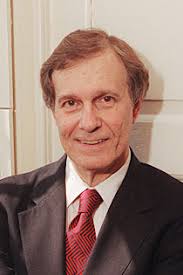
Neil Rudenstein


Where you start is
not as important as
where you finish.


Just in case you have even of a trace of PLOM ("poor little old me") disease and are saying,"But,G, you don't understand about my past," I've got a better idea for you. Instead of explaining why it won't work for you, let me tell you how it worked for others.

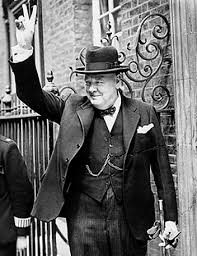
A study of three hundred world-class leaders, including Franklin D. Roosevelt, Sir Winston Churchill, Clara Barton, Helen Keller, Mahatma Gandhi, Mother Teresa, Dr. Albert Schweitzger, and Martin Luther king, Jr., revealed that 25 percent of them had serious physical disabilities and an additional 50 percent had been abused as children or were raised in poverty.

The world-class leaders responded (positive) instead of reacted (negative) to what happened to them. Remember, it's not what happens to you; it's how you handle what happens to you that's going to make a difference in your life.

Neil Rudenstein's father was a prison guard and his mother a part-time waitress. Today , Dr. Neil Rudenstein is president of Harvard University. He says he learned very early in life that there is a direct correlation between performance and reward.Rudenstein and the three hundred world-class leaders personally learned that it's not where you start- its where you finish- that counts.


In all things God works for
the good of those who love
him, who have been called
according to his purpose.

Romans 8:28

Principle #5


Make failure
your teacher, not
your undertaker


Sometimes little irritations, mistakes, and failures come our way that are not earth-shattering or life-changing, but they cause a momentary stop in our progress. Sometimes we permit the little incidents to linger entirely too long and give us problems far beyond their significance. Let's say that you are caught in one of these situations, and at the moment you're not depressed, but you're not exactly on cloud nine either. As a result, you know that you are not as friendly or as productive as you would like to be, so you want to snap out of it.
What do you do?

Step no.1: acknowledge that you're in a funky mood; you got the "blahs".

Step no.2: recognize that your momentary switch from positive thinking to "stinkin' thinkin" is neither permanent nor even life threatening, so it won't be fatal. It's eventually going to end, so instead of waiting for a change in circumstances to bring an end to "blahs," make a conscious decision to end them yourself! Which means you have once again accepted responsibility, you circumstances will change and you will have turned a small tragedy into a big triumph.


Don't you know that this
good man, though you
trip him up seven times,
will each time rise again?

proverbs 24:16 TLB
 

Design in CSS by TemplateWorld and sponsored by SmashingMagazine
Blogger Template created by Deluxe Templates